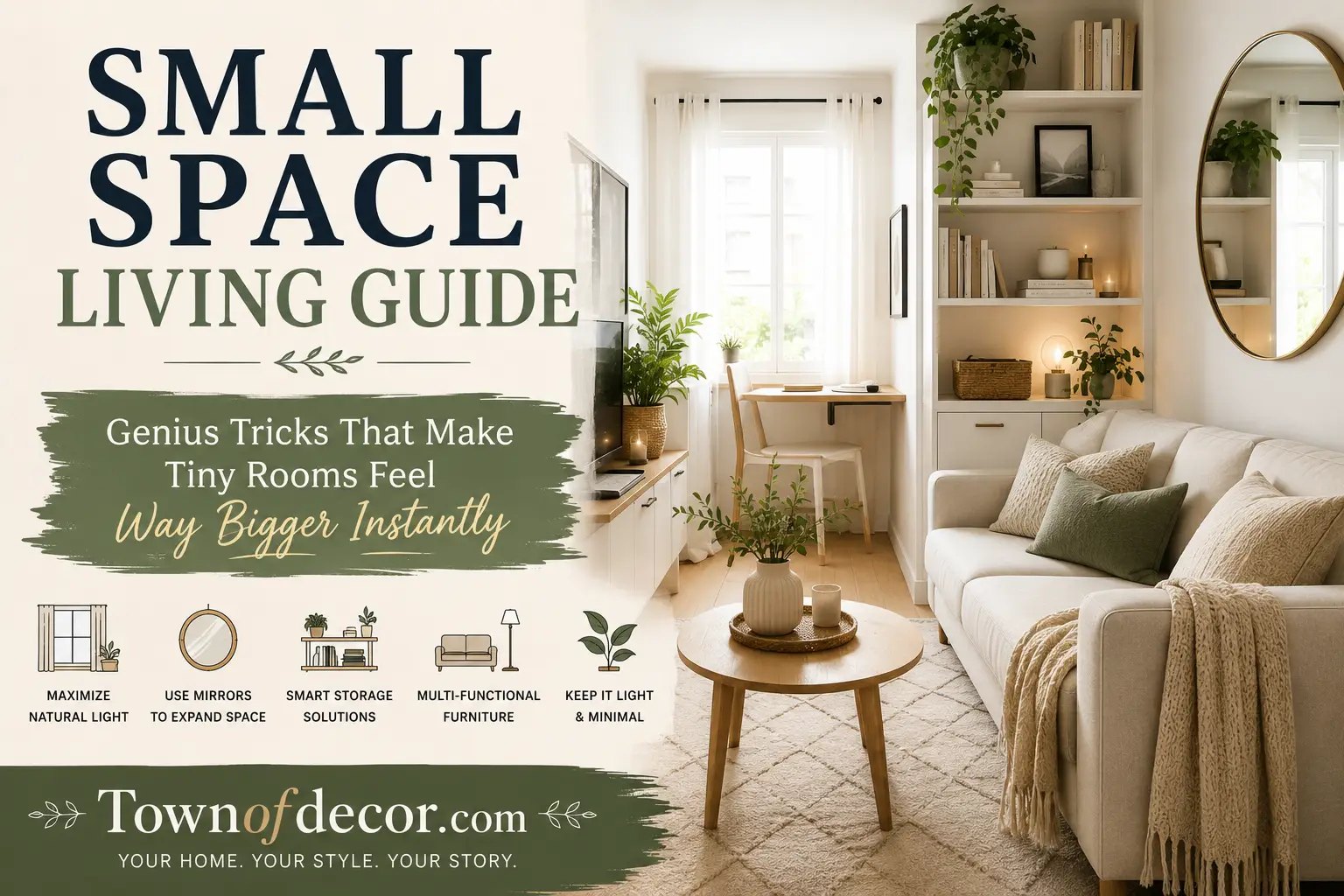
Small Space Living Guide: Genius Tricks That Make Tiny Rooms Feel Way Bigger
✨ Home Design Guide 2025
Small Space Living:
Genius Tricks That Make Tiny Rooms Feel Way Bigger Instantly
Everything you need to know to live large in a small footprint 🏠
🗓️ 2025 Living Guide⏱️ 13 min read🏠 Interior Design💡 2,500 words
Living in a small space does not mean living a small life. It means getting seriously creative, embracing every square foot like it owes you something, and learning a few clever tricks that designers have been quietly using for years. This guide is your complete playbook. 🙌
Let’s be really honest about something. When most people first move into a small apartment or a compact home, the initial reaction tends to swing between two extremes. Either they go into total denial mode and cram in every piece of furniture they own hoping nobody notices, or they feel so overwhelmed that they end up living in a bare, cheerless box that feels more like a waiting room than a home.
Neither of those approaches is the answer. The real answer is learning how to think differently about space itself. And once that mental shift happens? Everything changes. Suddenly a 400 square foot studio starts to feel like the coziest, most intentional little sanctuary you have ever lived in. A tiny bedroom starts to feel like a boutique hotel room. A cramped living room becomes a clever, personality-packed space that every guest secretly envies. 😍
That transformation does not require a huge budget or a complete renovation. It requires knowledge, a little creativity, and the willingness to rethink some habits and assumptions you might not even realize you have been carrying around. So let us get into it. Every trick, every principle, every game-changing detail that makes small spaces feel dramatically bigger. Starting right now.
70%of perceived space is psychological, not physical
3ximpact of correct lighting vs furniture choice
40%bigger rooms feel with correct mirror placement
the psychology of space
Why Small Rooms Feel Small (It’s Not What You Think) 🧠
Before we get into the practical tricks, it helps to understand the psychology behind why a room feels cramped or spacious in the first place. Because here is the thing that surprises most people: the actual square footage of a room has less to do with how big it feels than you might expect. Two rooms with identical dimensions can feel completely different based on how they are styled, lit, and arranged.
The human brain reads space through a series of visual cues. Sightlines are one of the most important. When your eye can travel from one end of a room to another without hitting an obstacle, your brain registers the room as open and spacious. When furniture or clutter interrupts that journey, the brain starts to feel boxed in, regardless of how much actual square footage exists. This is why a room can feel instantly bigger just by rearranging furniture, without removing a single piece.
Light is another enormous factor. Spaces that are well-lit signal safety and openness to the brain, while dark or poorly lit spaces trigger a subtle sense of compression and discomfort. This is an evolutionary response, and it is incredibly powerful. Making a room brighter is often the single fastest way to make it feel larger, and it costs nothing if you are willing to rethink your window treatments and bulb choices. 💡
Color registers differently on the brain too. Lighter colors reflect more light and cause the eye to move smoothly around a space, making it feel more open. Darker colors absorb light and can make walls feel like they are physically closing in. This does not mean you can never use dark colors in a small space, but understanding how color works psychologically lets you use it strategically rather than accidentally.
The most powerful design upgrades in a small home cost almost nothing. They are shifts in thinking about light, layout, and the ruthless prioritization of what actually belongs in a space. 🌟
lighting magic
Light Is the Ultimate Space Expander 💡
If you only take one piece of advice from this entire guide, let it be this: fix your lighting first. Before the furniture, before the color palette, before the storage solutions. Nothing has a faster or more dramatic effect on how large a small space feels than getting the lighting right.
Most small apartments and compact homes are plagued by the same lighting sin: a single overhead fixture centered in the ceiling, often with a harsh or cold bulb, casting flat, shadowless light that makes every flaw visible and every corner feel dead. This kind of lighting does not just fail to help a small space. It actively makes it feel worse.
Layer Your Light Sources 🕯️
The principle of layered lighting means having multiple light sources at different heights in a room, each serving a different purpose. Ambient light provides the overall illumination. Task lighting handles specific functional needs like reading or cooking. Accent lighting creates warmth, depth, and atmosphere. When all three layers are working together, a room comes alive in a way that flat overhead lighting simply cannot achieve.
In a small space, floor lamps are your best friends because they draw the eye upward, creating an illusion of height. Wall sconces are incredible because they free up floor and surface space while providing beautiful, indirect light. Table lamps on side tables or bookshelves create warm pockets of light that make a room feel cozy and dimensional rather than flat and cramped. Even a string of warm-toned fairy lights along a shelf or draped near a window can transform the feeling of a tiny room dramatically. ✨
🪟
Maximize Natural Light
Swap heavy curtains for sheer linen panels. Mount curtain rods as close to the ceiling as possible and extend the rod 15 to 20cm beyond the window on each side. This makes windows look dramatically larger and floods the room with light.
💛
Switch to Warm Bulbs
Cool white bulbs make small spaces feel clinical and cold. Swap every bulb to warm white (2700K to 3000K) and watch the whole room soften and open up. It is one of the cheapest and most effective changes you can make.
🕯️
Candles Are Not Just Decor
Candles placed strategically around a small room add genuine warmth and visual depth. Group them in clusters of three for the most impact. The flickering light creates movement that makes a static small space feel dynamic and alive.
📍
Light Dark Corners
Dark corners are the enemy of a spacious feeling. A small plug-in sconce or a battery-powered lamp in an unused corner instantly opens up the room and eliminates that boxed-in feeling that dark spots create.
the mirror effect
Mirrors: The Small Space Cheat Code 🪞
If lighting is the unsung hero of small space design, mirrors are the most dramatically effective tool available to anyone working with limited square footage. A well-placed mirror does not just add a decorative element to a room. It physically doubles the visual space. It bounces light. It creates the illusion of a view or a window where there is none. Mirrors are genuinely magic, and using them correctly is one of the most impactful things you can do in any small room.
The key word is “correctly,” because badly placed mirrors can actually make a small space feel more disorienting and chaotic rather than larger. There is real strategy behind mirror placement, and once you understand it, you will never look at an empty wall the same way again.
Where to Place Mirrors for Maximum Effect 🎯
Across from a window is the single most effective location for any mirror in a small space. When a mirror faces a window, it captures and reflects the natural light and the view beyond the glass, creating a powerful illusion that the room extends into what feels like another space. The effect is so convincing that many people cannot immediately tell which surface is the window and which is the mirror, especially in photographs. That is exactly how strong this trick is.
Leaning a large floor mirror against a wall is a decorating trick that has taken over social media for good reason. A tall leaning mirror not only adds serious style but also draws the eye from floor to ceiling, making the walls feel taller and the whole room feel more expansive. In a tiny bedroom especially, a large leaning mirror is a completely transformative piece that costs less than most sofas.
Mirrored furniture is another tool worth knowing about. A mirrored nightstand, a mirrored console table, or mirrored cabinet doors all reflect light and create the visual impression of transparency, which makes them take up far less visual space than their solid counterparts. This does not mean you need to turn your home into a Hollywood boudoir. Even one or two mirrored pieces used thoughtfully can make a significant difference. 💎
The Gallery Wall Mirror Trick 🖼️
Instead of a single large mirror, try creating a gallery wall that mixes mirrors of different sizes and shapes with a few framed art pieces. This creates a curated, high-end look while distributing the light-reflecting benefits across a larger portion of the wall. Round mirrors are particularly effective mixed with rectangular frames because they break up the rigidity and add a sense of movement and depth that makes the wall feel like part of a much larger space.
furniture strategy
Furniture Choices That Make or Break Small Rooms 🛋️
The furniture decisions you make in a small space are some of the most consequential choices in the entire design process. The wrong furniture can make a perfectly proportioned room feel impossibly small. The right furniture can make a genuinely tiny room feel like it has twice the space. The difference often comes down to scale, leg height, and the principle of multifunctionality.
The Golden Rules of Small Space Furniture 📏
Choose furniture with legs. This is one of the most consistently effective tricks in the small space designer’s toolkit. When furniture sits directly on the floor, it creates a visual heaviness that makes it seem like it is sinking into the space. When furniture has legs, even low legs, you can see the floor beneath it, and that glimpse of floor makes the room feel lighter and more open. A sofa on legs, a bed frame on legs, a side table on legs. All of these create the impression of more floor space than actually exists, and that impression is incredibly powerful.
Think vertical, not horizontal. In a small space, your most underused resource is almost always the wall space above eye level. Most people furnish a room up to about 1.5 meters high and then leave everything above that completely bare. This is a missed opportunity of enormous proportions. Floor to ceiling bookshelves, tall wardrobes that go all the way to the ceiling, artwork hung higher than you think feels natural. All of these strategies draw the eye upward, make the ceilings feel taller, and free up precious floor space at the same time. 📚
Multifunctional furniture is non-negotiable. In a small space, every piece of furniture should ideally do more than one job. An ottoman with internal storage. A bed with built-in drawers underneath. A dining table that folds down from the wall. A sofa that converts into a guest bed. A coffee table with a lift-top that converts into a workspace. These pieces do not just save space. They reduce the total number of pieces you need in the room, which automatically makes the whole space feel less crowded and more intentional.
🛏️ Bedroom Must-Haves
A platform bed with under-bed storage drawers. Floating nightstands instead of freestanding ones. Mirrored wardrobe doors. A tall narrow bookshelf in the corner rather than a wide low dresser.
🛋️ Living Room Wins
A sofa with visible legs in a light neutral color. A nesting set of tables instead of a large coffee table. Floating shelves instead of a bulky entertainment unit. A slim console table behind the sofa for extra surface space.
🍽️ Dining Solutions
A round dining table instead of rectangular, which allows easier movement around it. Folding chairs that hang on the wall when not in use. A fold-down wall-mounted table for smaller kitchens. Benches instead of chairs on one side to tuck away neatly.
💼 Home Office Tricks
A floating desk mounted to the wall. A murphy bed with a built-in desk system. A closet converted into a dedicated office nook. A narrow secretary desk that closes completely when not in use.
color and pattern
Using Color to Create Space (Without Going All White) 🎨
There is a pervasive myth in small space design that says you must paint everything white or it will feel small. This is not entirely true, and it has resulted in a lot of small apartments that feel more like sterile boxes than actual homes. Yes, light colors generally help create a sense of openness. But the relationship between color and perceived space is more nuanced than just light versus dark, and understanding those nuances opens up a much richer range of options.
The most effective color strategy for a small room is what designers call a tonal or monochromatic approach. This means using different shades and textures of the same color family throughout a space rather than contrasting colors. When the walls, the larger furniture pieces, the rugs, and the window treatments all live within the same color family, the eye moves smoothly around the room without stopping at visual boundaries. This creates a seamless, flowing effect that makes the space feel unified and therefore larger.
Warm Linen
Sage Green
Dusty Blue
Greige
Cream White
Warm Taupe
The accent wall strategy works beautifully in small spaces too, but perhaps not in the way you have seen it done before. Instead of painting one wall a dramatic contrasting color, try painting the wall at the far end of a narrow room a slightly darker shade of the same color you used on the other walls. This creates a subtle sense of depth that makes the room feel longer than it actually is. It is one of those tricks that works almost invisibly, and guests will not be able to pinpoint exactly why the room feels so well-proportioned. 🎨
Paint the ceiling. This is genuinely one of the most underused tricks in the entire small space playbook. Painting the ceiling a shade slightly lighter than the walls creates the visual impression of height. Using the same color on both the walls and ceiling in a deep or rich tone creates an enveloping, cozy effect that feels intentional and boutique-like rather than cramped. Both approaches work. What does not work is the standard white ceiling in a space where all the other colors are mismatched and fighting each other.
storage and clutter
The Clutter Problem Nobody Wants to Talk About 🗂️
We are going to be real with each other for a second, because this section is the one most people want to skip and it is also the most important one in the entire guide. No amount of clever lighting, strategic mirrors, or perfectly scaled furniture will make a small space feel big if it is full of clutter. Clutter is the single most effective space-shrinker in existence, and it works by eating up every surface, blocking sightlines, and creating visual chaos that makes the brain feel overwhelmed and closed in.
This is not a conversation about minimalism as a lifestyle philosophy. You can absolutely love collecting things, having hobbies, living a full and rich life with all the physical stuff that comes along with it. But in a small space, the editing process is non-negotiable. Not everything can be on display all the time. The things that are on display should be there because they are genuinely beautiful or meaningful, not just because you have not gotten around to finding them a home yet. 🌿
🏠 The Small Space Storage Masterplan
- Go vertical with storage. Install shelving all the way to the ceiling rather than stopping at the standard mid-wall height. The upper shelves can hold items you use less frequently while keeping the lower and more visible shelves beautifully curated.
- Use the space under your bed religiously. Under the bed is one of the largest storage opportunities in any small home and most people use it inconsistently or not at all. Invest in proper under-bed storage containers and use this space for seasonal items, extra bedding, and anything you need to store but do not need daily access to.
- Treat your entryway as a command center. The entryway sets the tone for the entire home. Built-in hooks, a storage bench with space underneath, a narrow console table with baskets below and a mirror above. Getting the entry organized immediately reduces the visual chaos that tends to spread from this high-traffic zone into the rest of a small home.
- Decant and declutter the kitchen. Kitchen clutter is particularly stubborn because kitchens are functional spaces with a lot of necessary items. Decanting pantry staples into matching glass jars immediately makes a small kitchen look more spacious and intentional. A magnetic knife strip frees up counter space. Hooks on the inside of cabinet doors create extra storage that would otherwise not exist.
- Edit what is on display every season. Instead of having everything you love out at once, store half of it and rotate. This keeps the space feeling fresh and curated rather than static and overcrowded, and it means you genuinely enjoy each piece when it is out rather than barely noticing it.
- Use baskets as beautiful storage. Woven baskets, linen bins, and ceramic containers can hold a significant amount of everyday clutter while contributing to the aesthetic rather than fighting it. A basket on a shelf looks intentional. A pile of random items on that same shelf does not.
🪴
Plants, Rugs, and the Finishing Touches That Tie It All Together ✨
Once the big decisions are made, the finishing touches are where the magic of a small space really comes together. And two elements deserve special attention because they have an outsized impact on how spacious and cohesive a room feels: rugs and plants.
The single most common rug mistake in small spaces is going too small. A tiny rug floating in the middle of a room does not make the space feel cozy. It makes it feel like you ran out of money before you could finish decorating. A rug that is large enough to sit at least the front legs of all the main furniture pieces anchors the entire seating area and makes the room feel like a deliberate, unified space. Going bigger than feels comfortable in a small room is almost always the right move with rugs. 🏡
Plants are another element that punch far above their weight in a small space. A large-scale plant like a fiddle leaf fig, a monstera, or a bird of paradise adds a sculptural quality to a room that no piece of furniture or art can quite replicate. The presence of something living and growing creates an atmosphere that feels full and rich without adding visual clutter. A single large plant in a beautiful pot makes a much stronger statement than ten small ones scattered around a tiny room.
Finally, think carefully about scale and proportion in everything you choose. One common mistake in small spaces is to fill them exclusively with small-scale items, thinking that smaller pieces will take up less visual space. In reality, a room full of small-scale objects tends to look fussy and busy rather than spacious. Mixing in one or two larger-scale items creates visual anchors that actually make the surrounding space feel larger by contrast. A big piece of art on a small wall. A dramatically oversized pendant light. A full-length mirror that commands an entire corner. These bold choices are what elevate a small space from feeling like a compromise to feeling genuinely stunning. 🎨
Your Small Space Era Starts Now 🏠✨
Small spaces are not a limitation. They are an invitation to be more intentional, more creative, and more deliberate about every single choice you make in your home. The people who live most beautifully in compact spaces are not the ones with the most money or the most square footage. They are the ones who understand how space actually works and use that knowledge to make every inch feel like it belongs to them. That person can be you. Start with one room, one trick, one shift in how you think about the space you already have. The rest will follow. 💕
Written for everyone who has ever looked at a tiny room and thought “I can work with this” 🌿 | Home Design 2025